Poland: The Complete Destination Guide
Poland is one of the most attractive destinations in Central Europe, which has experienced a boom in tourist interest in recent years. Did you know that Poland is home to the oldest national park in Central Europe (Pienin National Park from 1932)? This country offers incredible diversity: from historical cities steeped in culture, through majestic mountains and national parks, to the calm coast of the Baltic Sea. Due to its size (over 312,000 km²) and strategic location between the West and East of Europe, Poland has retained its own character and provides an authentic insight into Central European culture.
History of Poland and its influence on the present
Polish history is a story of resilience and cultural richness that is still reflected in every corner of the country. The emergence of Polish statehood is related to the year 966, when Prince Měšek I was baptized and established Western Christianity in the country. This moment gave birth to the Polish Kingdom, which was formally established in 1025 during the reign of his son Boleslav the Brave. During the Golden Age under Casimir III. Great (14th century), Poland became one of the most integrated and economically developed countries in Europe.
The period from the 14th to the 16th century represents the peak of Polish power under the Jagiellonian dynasty. They expanded the Polish territory and connected the country with Lithuania in the powerful Polish-Lithuanian Union. A significant clash took place in 1410 at the Battle of Grunwald, where Polish-Lithuanian troops definitively defeated the Teutonic Knights. The Renaissance period of the 16th century brought the flourishing of science and culture - it was from this period that the famous astronomer Nicolaus Copernicus came. A tragic period came with the third partition of Poland in 1795, when Russia, Prussia and Austria divided the country. Poland ceased to exist as an independent state and its citizens lived in a divided country for 123 years before regaining independence in 1918.
The twentieth century was the most difficult test for Poland. The Second World War left deep scars here - concentration camps, especially Auschwitz, became a symbol of the horrors of the Holocaust. Warsaw's historic center was razed to the ground during the war, but the Polish nation retained its identity and rebuilt it after the war. The communist period and the subsequent Solidarity movement were key to the fall of the Iron Curtain in Europe. Today, Poland is part of the European Union and NATO, which means that travel is easy and safe for Czech citizens.
Location, geography and climate
Location and geography of Poland
Poland is located in Central Europe and occupies a key position between the west and east of the continent. It borders Germany to the west, the Czech Republic and Slovakia to the south, Belarus and Ukraine to the east, and Lithuania and Russia to the north (Kaliningrad Region). From the north, Poland has access to the Baltic Sea, making it an important coastal destination in Central Europe. The area of the country is 312,696 km², which ranks it among the largest European states.
The geographical distribution of Poland is fascinating – more than two-thirds of the territory consists of plains and lowlands. The northern part, especially Pomerania and Masuria, is characterized by large lakes and virgin nature, which was left here by the last glacier. The central-eastern part consists of low highlands and extensive forests. The south of the country is mountainous – Southeastern and Southern Poland is home to majestic mountains. The Tatry Mountains (with the Rysa peak at 2,499 m) form the natural border with Slovakia and are among the most beautiful mountain massifs in Europe. Furthermore, the Pieniny, Beskydy and a number of other mountain ranges spread here, which offer inexhaustible possibilities for mountain tourism. The most important river in Poland is the Visula, which flows through the country from south to north and empties into the Baltic Sea. Other important rivers are the Oder, which forms part of the border with Germany, and the Bug, which flows through the eastern part.
Weather and climate for travelers
Poland has a temperate climate with continental influences, which is a combination of maritime influence from the north and continental currents from the east. This means that the weather is very changeable and sometimes unpredictable. On the north coast by the Baltic Sea, the climate is milder with cooler winters and summers that are not too hot. Inland, and especially in the east, a continental climate with distinctly different seasons is evident.
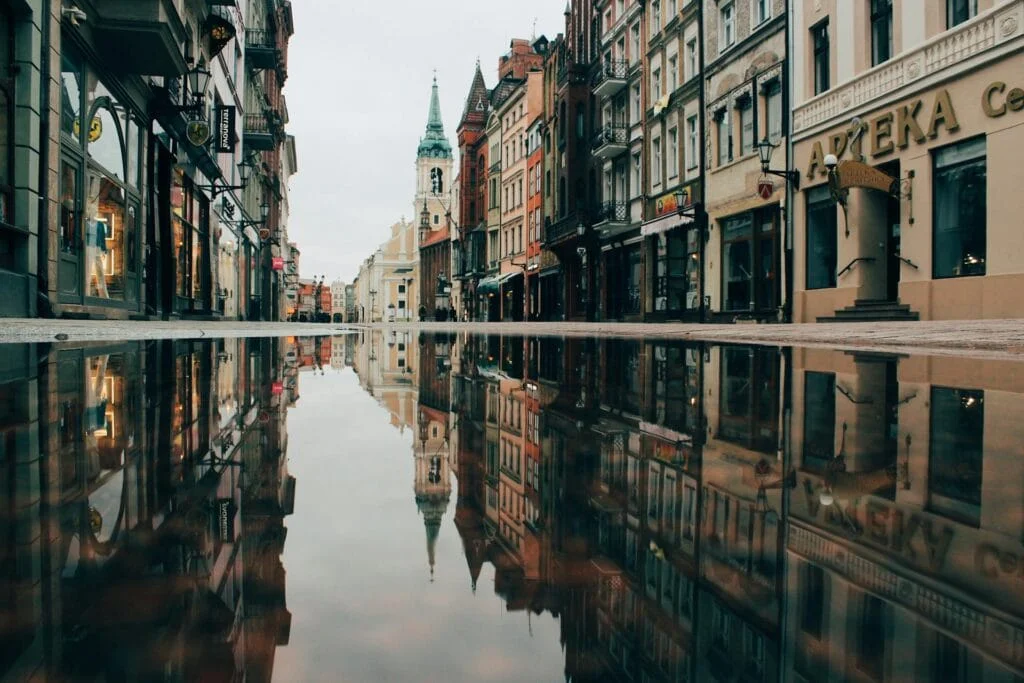
Winters in Poland are cold and in mountainous areas rich in snow. Average winter temperatures are around –3 °C in the lowlands and can drop below –10 °C in the mountainous areas. Summers are warm, with average temperatures around 20-22 °C, while in the lowlands, especially around Warsaw, temperatures can reach 30 °C. The transitional periods - spring and autumn - are very pleasant and ideal for travel.
| Month | Average day temperature | Average night temperature | Sea temperature (Balt) |
|---|---|---|---|
| January | –2 °C | –5 °C | 3 °C |
| February | 0 °C | –4 °C | 2 °C |
| March | 6 °C | 1 °C | 3 °C |
| April | 14 °C | 7 °C | 6 °C |
| May | 20 °C | 12 °C | 11 °C |
| June | 24 °C | 16 °C | 17 °C |
| July | 26 °C | 18 °C | 19 °C |
| August | 25 °C | 17 °C | 19 °C |
| September | 20 °C | 13 °C | 16 °C |
| October | 14 °C | 8 °C | 11 °C |
| November | 7 °C | 3 °C | 7 °C |
| December | 1 °C | –3 °C | 4 °C |
The best time to visit Poland depends on the type of activities you are planning. For lovers of beaches and summer travel, the months June to September, when the water in the Baltic is warmest (16-19 °C), are ideal. For mountain tourism and outdoor activities, May to September is recommended, with July and August being the peak season. For those who want to explore historical cities without the crowds, the ideal months are April, May, September and October, when the weather is still pleasant but the destinations are not crowded with tourists. The Winter months offer a magical view of snow-covered historic centers and are great for winter sports in the mountains, but the weather tends to be cold and wet.
Regions of Poland and the most attractive destinations
Mazovia and Warsaw: The Heart of the Country
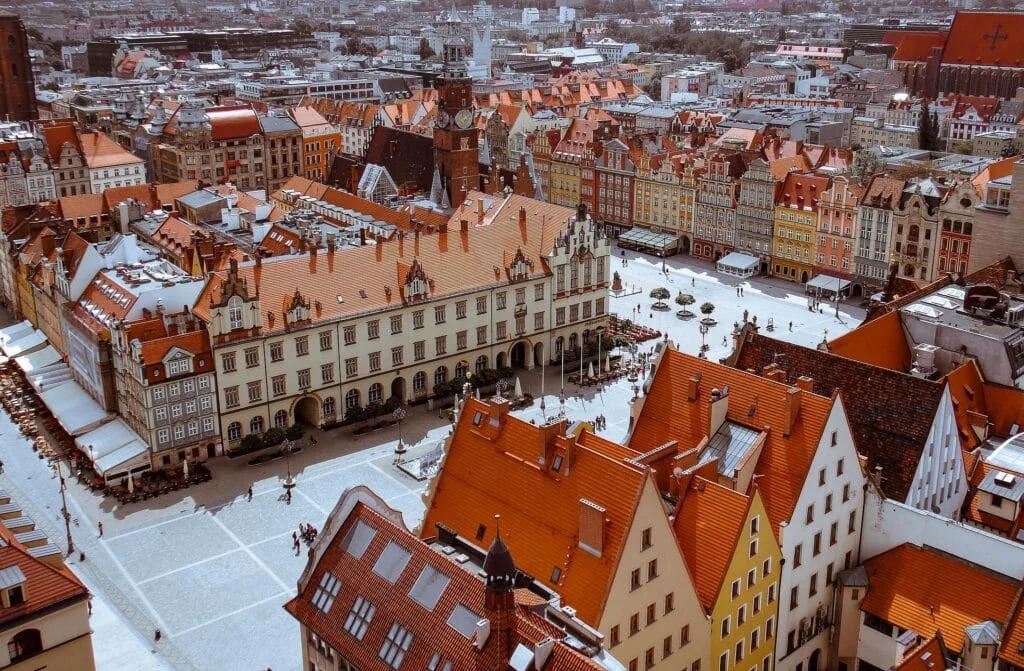
Warsaw, the capital of Poland, is a dynamic and modern city that surprises with its contrast between the historic center and modern architecture. Over 80% of the city was destroyed during World War II, but the Poles rebuilt it with admirable perseverance. The historic center with the Old Town Market Square (Rynek Starego Miasta) has been restored with such precision that it was included in the UNESCO list. Visitors can stroll through the medieval streets, where they will see colorful houses, small cafes and galleries. The Royal Castle stands as a symbol of Polish statehood and is open to the public. Other attractions include the Palace of Culture and Science, an iconic building from the socialist era that offers a wonderful view of the city. Warsaw also has extensive parks – especially the Łazienki Park with its islets and the Saxon Garden are ideal for a walk.
Małopolska and Kraków: The Fabulous Past
Krakow, the second largest city in Poland, is clearly one of the most beautiful European destinations. The historic center was already built in the 13th century and it was here that the Polish kings were crowned. The dominant feature is the huge Main Square (Rynek Główny) – one of the largest medieval squares in Europe – with the iconic Sukiennice Market and the Marian Church with its typical tower. A labyrinth of historic streets full of cafes, restaurants and shops stretches around the square. An extraordinary place is the Jewish quarter of Kazimierz, which was one of the largest centers of Jewish culture in Europe and today retains an authentic atmosphere with many synagogues and monuments. From the square, the Královska cesta leads directly to the Wawel Castle, which dominates the Visula river and is the embodiment of Polish power and majesty.
There are several other mandatory stops near Krakow. Auschwitz (Oświęcim in Polish), where Auschwitz-Birkenau was located, was the largest Nazi extermination camp. During the Second World War, approximately 1.1 million people died here, of which approximately 90% were Jews. Visiting this place is emotionally demanding, but necessary for understanding the modern history of Europe. Vělička Salt Mine, one of the oldest in Europe, offers underground cathedrals and lakes that are truly magical. The town of Tarnów and the villages around Krakow provide an authentic insight into traditional Polish rural life.
The Baltic Sea Coast: A Sandy Paradise
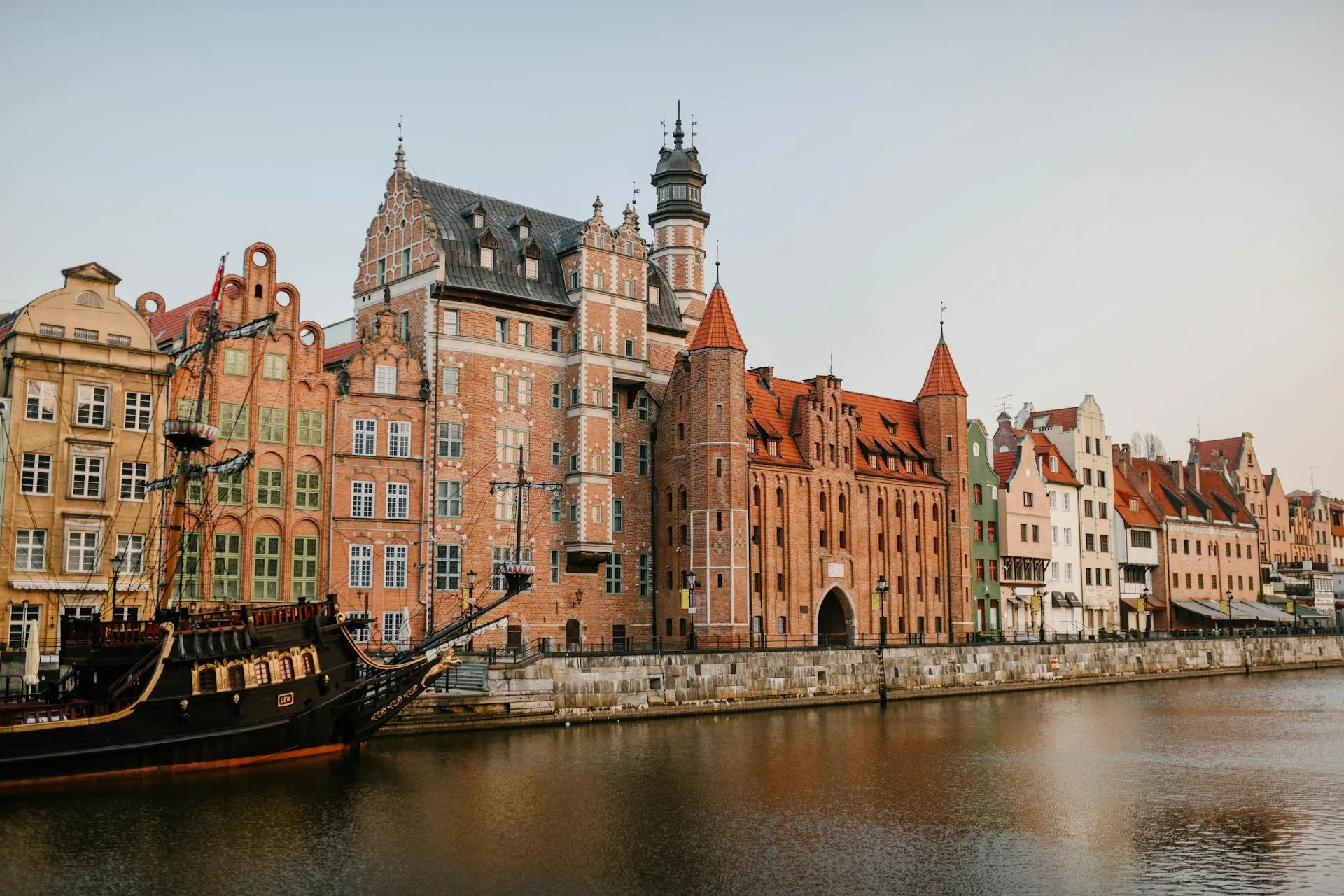
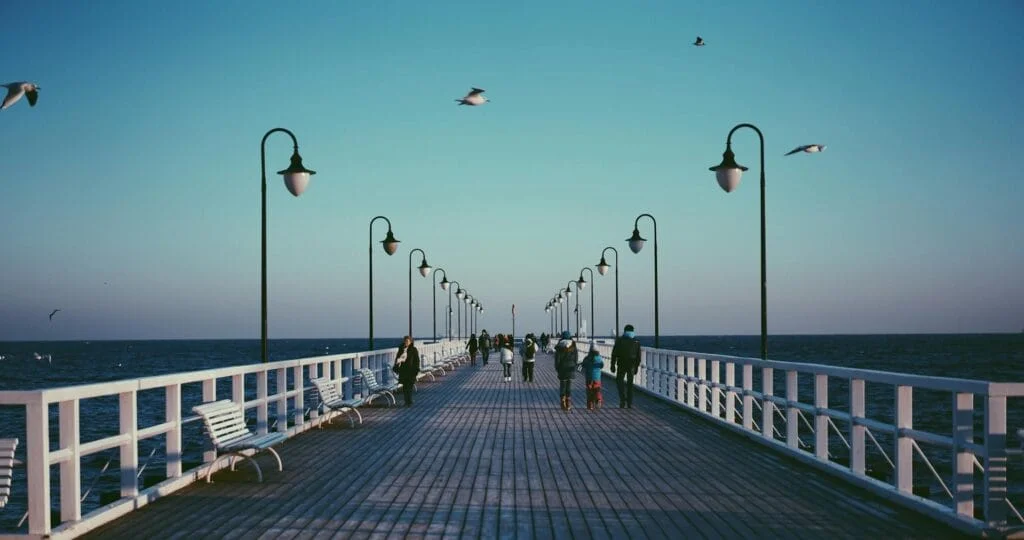
The Baltic coast of Poland offers long sandy beaches that stretch for more than 400 km. The main city on the coast is Gdańsk, sometimes called the "Venice of the Baltic" thanks to its colorful houses reflected in the canals. Historically, Gdańsk was a very rich Hanseatic city and today it is one of the most beautiful cities in Poland. A walk through the old town is like a trip back in time – narrow cobbled streets, magnificent Renaissance houses, the Marian Church and a port full of color and life. Sopot Pier, the longest wooden pier in Europe, is a popular place for walks and offers a wonderful view of the sea.
The most famous beaches in the region are Stogi in Gdańsk (a wide beach with fine sand), Łeba (a beach in the heart of the national park with famous moving dunes) and Helská kosa (56 km long peninsula surrounded by sea). The town Kolobřeh offers a combination of a historic center and modern spa services. You can travel along the coast along the Baltic Cycle Path, which runs along the entire Polish coast.
Pienin National Park: Natural Spectacle
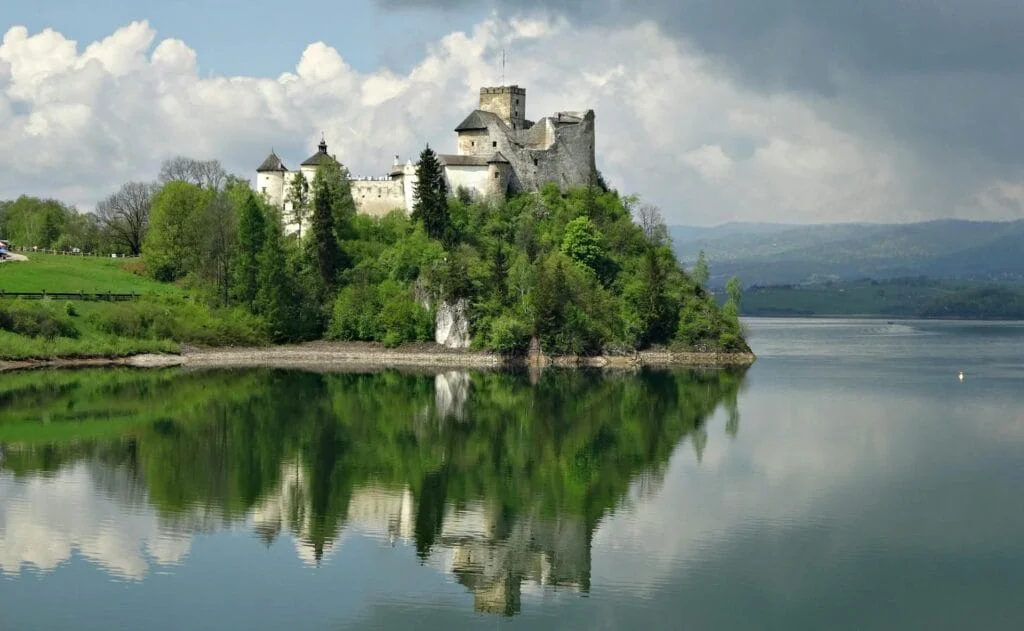
Pieniński National Park (Pieniński Park Narodowy) is the oldest national park in Poland (founded in 1932) and at the same time one of the smallest – it has an area of only 2,346 hectares. It is located on the border with Slovakia, and its dominant feature is the Three Crowns massif (Trzy Korony). The main attraction is floating the Dunajec River Canyon - one of the most impressive activities in Poland. As you cruise down the river on wooden rafts or in a kayak, you'll see magnificent limestone walls rising from both sides of the river. The park is also home to the ruins of Pienin Castle from the 13th century. Tourists can visit the quiet spa resort of Szczawnica or the charming village of Krościenko.
Slovenian National Park: Polish Sahara
The Slovenian National Park (Słowiński Park Narodowy) is located on the coast of the Baltic Sea and is known primarily for its moving sand dunes with an area of approximately 500 hectares - commonly called the "Polish Sahara". The dunes move about 10 meters per year due to the winds blowing from the west. The highest dune Łącka Góra reaches a height of up to 42 meters. The park is also home to lakes Łebsko and Gardno, which are home to many birds and amphibians. The park offers 34 kilometers of marked paths ideal for hiking and cycling.
The Tatras and the Polish side of the Giant Mountains
Poland's southern border is formed by the High Tatras, the highest and most dramatic mountain range in Poland. Although their highest peak Rysy (2,499 m) is not extremely high, the landscape here has an alpine character with steep rock faces, mountain lakes and valleys. The Tatra National Park offers countless trekking routes for all fitness levels. The popular town of Zakopane is the heart of mountain culture - here you will find yourself in the "Polish Alps" with traditional wooden huts (Zakopane style), pubs and a wonderful view.
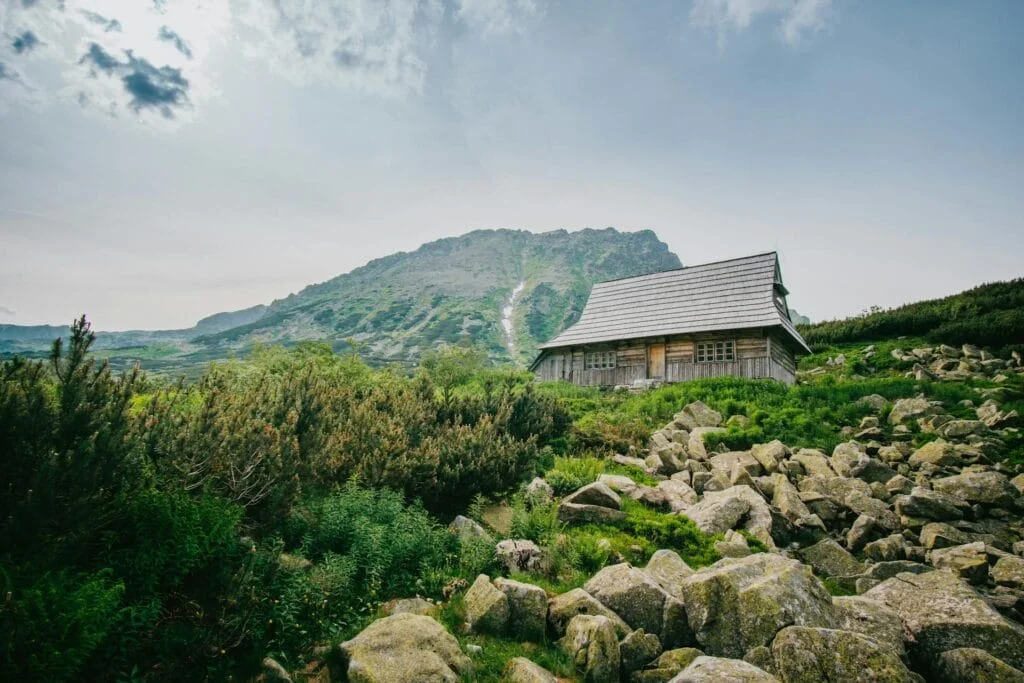
Further to the west of the Tatras lie other beautiful mountain areas. The Polish side of the Giant Mountains (Karkonosze) offers pleasant mountain hiking with trails leading through mountain meadows and forests. The city of Karpacz is an ideal base for trips.
The most famous sights and cities
Malbork Castle: The largest Gothic building in the world
Malbork, despite its remote location northeast of Gdańsk, is one of the most amazing places in Poland. The Order of the Teutonic Knights began to build the castle here in 1274 as their strategic fortress. It gradually developed into a monumental complex, which covers 21 hectares and is the largest Gothic building in the world and at the same time the largest brick building in the world. In its current form, it consists of three main parts: the High Castle, the Middle Castle and the Low Castle. In the 14th-century Palace of the Grand Masters, which was once the residence of the Grand Master of the Order, you will see magnificent cruciform vaults and masterful frescoes. The castle also houses the amber museum, the most important collection of its kind in the world. The castle was inscribed on the UNESCO list in 1997 and is undoubtedly the most valuable monument of Polish Gothic architecture.
Warsaw Old Town: Reborn from the Ashes
Warsaw's Old Town is an example of extraordinary Polish resilience. During the Second World War, the historical buildings were almost completely destroyed. After the war, Poles began to systematically restore medieval streets and houses, guided by historical drawings and old photographs. Today, the Old Town is one of the best-reconstructed historical centers in Europe and is on the UNESCO list. A walk through the Old Town will take you into the world of Gothic and Renaissance architecture. In the Royal Castle you can see historical interiors and art collections.
Krakow: All-round wealth
Krakow basically deserves its own chapter. The city is a unified work of art – from the Old Town Square to the traditional Jewish quarter Kazimierz to the Wawel hill. A walk through the city will take you past beautiful churches (especially the Marian church with a bell ringing from the tower every hour), through medieval markets, alleys with traditional souvenir shops and up to the majestic castle.
Natural beauties and national parks
National parks of Poland
In Poland, tenth of its area is protected as national parks or protected landscape areas. In addition to the already mentioned Pieniny and Slovensky Parks, Tatra National Park, Białowieża Forest (an ancient forest on the border with Belarus, also on the UNESCO list), Kampino National Park near Warsaw and many others stand out in particular.
Masurian Lake Plateau: Thousands of Lakes
Northeastern Poland, especially the Masurska region is dotted with thousands of lakes - remnants of the last glaciation. Lake Mamry and Śniardwy are among the largest. The landscape is ideal for water sports (canoeing, windsurfing), fishing and relaxing in peace. The main centers of the region are Mrągowo and Mikołajki, a charming town on the banks of the lakes.
Białowieża Forest: The Original Forest
Białowieża Forest is a remnant of the original European forest that once covered the whole of Central Europe. This forest is home to rare animals such as the European bison - an animal that was exterminated in the wild and reintroduced by captive breeding. Lynx, wolves and other predators can also be seen here. In addition, the forest is home to an extraordinary variety of plants and mushrooms.
Typical Polish food and gastronomy
Polish gastronomy: Traditional and hearty
Polish cuisine is hearty, rich and very tasty – ideal for cold continental winters. Traditionally, it relies on beef, pork and poultry, lots of potatoes and cabbage. However, simple ingredients do not mean a simple result.
The most famous Polish dishes that you absolutely must try:
- Bigos – the national dish of Poland, which is a dish made of stewed sauerkraut, mushrooms and various types of meat. This is a dish that takes a long time to prepare and tastes even better the next day.
- Pirogi (Pierogi) – filled bags made of unleavened dough, which are one of the symbols of Polish cuisine. They can be filled with sauerkraut and mushrooms, cottage cheese, meat, potatoes and onions, or sweetened with fruit. They are usually served with sour cream.
- Żurek – a thick, sour soup made from rye kvass, often served with sausage, mushrooms and a boiled egg. A very traditional dish that, according to Poles, cures hangovers.
- Barszcz (Boršč) – beetroot soup with meat broth. It is healthy and tasty, especially in the winter.
- Flaki – tripe soup, which may not be a favorite of everyone, but it is a traditional dish that many Poles love.
- Gołąbki (Piele) – cabbage rolls filled with minced meat and rice, stewed in tomato sauce.
- Polish sausage (Kiełbasa)- various types of homemade sausages, which are either smoked or fresh. They are served with bread and mustard.
- Pączki – sweet doughnuts filled with jam and sprinkled with powdered sugar. It is typically eaten on Fat Thursday.
Beverages and snacks
- Vodka (Wódka) – Polish vodka is justifiably famous. Try it in traditional pubs or "vodka bars".
- Polish beer (Piwo) – although not as famous as Czech, but quality Polish beers exist and are worth tasting.
- Mead (Miód pitny) – a traditional drink that has a long history in Poland.
- Coffee (Kawa) – Poles love coffee and cafes (kawiarnie) are a popular meeting place.
Times and etiquette in restaurants
Polish dishes are traditionally served with cream and bread, which is an integral part of every meal. Breakfast (Śniadanie) is served between 7 a.m. and 9 a.m. and is usually light. Lunch (Obiad) is the largest meal of the day and includes soup and a main course. She usually eats around 13.-14. clock. Dinner (Kolacja) is lighter and is served around 6-7pm. clock. Poles usually dine in restaurants between 19:00 and 21:00.
In Polish restaurants, it is customary to give a tip (napiwek) of 10-15% of the bill if you were satisfied with the service. In pubs, if you order at the bar, tipping is not mandatory, but is always appreciated.
Cultural festivals and customs
Poland is a country of deep traditions and festivities. Due to the high proportion of Catholics (more than 90% of the population), Easter and Christmas are the most important holidays.
Easter is associated with many traditional rituals. On Palm Sunday (Niedziela Palmowa), believers carry decorated "palms" to church. On White Saturday (Sobota Wielkanocna), people have food baskets consecrated in churches. Easter Monday (Śmigus-dyngus) is a day of merriment and traditional sprinkling of water.
Christmas is a time for family gatherings. During Advent, Christmas markets are organized in cities. Christmas Eve dinner begins with the breaking of a sacred wafer – family members pass it to each other as a symbol of mutual love and forgiveness.
Other important holidays and festivals include:
- All Saints Day (November 1) – a day to honor the dead, when Poles visit cemeteries and light candles.
- Independence Day (November 11) – a celebration of the regaining of Poland’s independence.
- Dominican Fair in Gdańsk (July/August) – one of the biggest festivals in Poland with live music, traditional culture and food.
- Cracow Crib Festival (December) – a unique competition show of traditional Cracow nativity scenes, which are real works of art.
Key practical information for travelers
Currency and payments
The currency in Poland is the Polish zloty (PLN). The exchange rate is around 5.5-£0 for 1 PLN. In banks and exchange offices (kantor) in city centers, money can be exchanged without any problems. ATMs (ATM) are found on every corner and are the easiest way to get local currency.
Card payments are common in restaurants, shops and hotels in cities. Smaller rural businesses and markets mainly accept cash. Tipping is not mandatory, but 10-15% of the bill is usual in restaurants and taxi services.
Entry formalities and visas
Traveling to Poland is easy for Czech citizens. A valid identity card or passport is enough to travel. Visa not required – Both the Czech Republic and Poland are part of the Schengen area and the European Union.
No compulsory vaccinations are required for entry from the Czech Republic. It is recommended to have a valid tetanus vaccination.
Safety and local customs
The security situation in Poland is very good. Poland is a country with a low crime rate and visitors do not need to worry too much. As in any country, general recommendations apply:
- Protect your personal belongings, money and documents - especially in places with a greater concentration of people (stations, markets, city centers) there may be pickpockets.
- Do not leave valuables such as watches, cameras and mobile phones in plain sight.
- In some areas, especially at night, avoid deserted streets on the outskirts of cities.
- Use guarded parking lots.
- Local customs are similar to Czech ones, but Poles are generally more religious and traditionally oriented. Respect for the Catholic faith and monuments is important.
Health care and insurance
On the basis of the European Health Insurance Card (EHIC) you are entitled to necessary health care in Poland. Nevertheless, it is strongly recommended to have a travel insurance that covers all possible medical expenses. Pharmacies (pharmacy) are located in all cities.
Ambulance service is available under the numbers 999 and 112 (single emergency line).
Fauna and flora of Poland
Poland is home to rich biodiversity. In forests there are European bison, lynx, wolves and bears (especially in the southern mountains). In addition, otters, beavers and various species of fox live here.
Among the birds are the golden eagle, sea eagle and various species of raptors. The stork and the heron can be seen on the lakes and in the river plains. The river kingfisher is typical of clean rivers.
The flora includes mixed birch and spruce forests, pines on sand dunes and typical alpine vegetation in the mountains. Many orchids and other protected plants grow in swamps and peatlands.
Basic Polish vocabulary
| Czech phrase | Polish translation |
|---|---|
| Good day | Dzień dobry |
| Good night | Good night |
| Please | Proszę |
| Thank you | Dziękuję |
| Thank you very much | Dziękuję bardzo | Do you speak Czech? |
| I am from the Czech Republic | I am from the Czech Republic |
| Where is the toilet? | Gdzie jest toilet? |
| Help! | Help! |
| Beer | Piwo |
| Water | Wodę |
| Food | Food |
| Good | |
| Bad | Bad |
| Cheap | Tanie |
| Expensive | Drugs |
Transportation and logistics
How to get to Poland
By air: The Czech Republic has very good air connections with Poland. The main airports are:
- Warsaw-Chopin Airport (WAW) – the largest and most important airport.
- Krakow-Balice Airport (KRK) – serves as the gateway to Krakow and southern Poland.
- Katovice Airport (KTW) – the third largest airport, serves Upper Silesia.
- Gdańsk Lech Wałęsa Airport (GDN) – connects the Czech Republic with the Baltic coast.
By train: From The Czech Republic has direct trains to Krakow and Warsaw. This mode of transport is convenient and provides an opportunity to see the countryside. Travel time is approximately 7-9 hours depending on the destination.
By bus: Bus operators (e.g. Flixbus, RegioJet) connect all the largest Czech cities with Polish ones. It is the cheapest option, but the journey usually takes longer.
By car: Traveling by car is convenient and flexible. From the Czech-Polish border it is approximately 5-7 hours to Warsaw and 4-6 hours to Krakow depending on the route and traffic.
Transport in Poland
Trains: Polish State Railways (PKP) has a dense network of tracks. There are both regional trains (Regio) and express trains (Pendolino) between the largest cities. Tickets can be bought online or directly at the station.
Buses: The bus network is very dense and covers even smaller towns and villages. Flixbus and other carriers run between major cities, smaller local companies (e.g. PKS) serve regional routes.
Car transport: Polish roads are generally in good condition. Highways are maintained, but they are often charged in the form of tolls. Parking in city centers is usually paid.
Urban public transport: There are trams, buses and metro in Warsaw in big cities (Warsaw, Krakow, Gdańsk). One-way tickets cost around PLN 4-5, day or multi-day tickets are also available.
Rent a car
Rent a car offers maximum flexibility. Prices range from around €25-50 per day for a basic car. It is recommended:
- Book a car in advance online for better prices.
- Have a valid driver's license (international is not mandatory for Czech drivers).
- Check the rental insurance conditions.
- Consider accident insurance.
- Know Polish road traffic rules.
Prices and travel budget
Poland is very affordable, especially compared to the Czech Republic and Western Europe. Here is an overview of average prices:
Budget per day for one person
| Budget category | Accommodation | Food | Transport/Attractions | Total for day |
|---|---|---|---|---|
| Budget | £300-£13 | £200-£10 | £150-£7 | 650 –£30 |
| Medium | 800-£40 | 400-£20 | 300-£13 | 1 500-£73 |
| Higher | 2,000+ CZK | 800-£50 | 500+ CZK | 3,300+ CZK |
Indicative prices in Poland
- Accommodation: Hostel 300-£20/night, average hotel 1,000-£67/night.
- Food: Bistro lunch 200-£12, dinner for two in restaurant 800-£50.
- Drinks: Pub beer 50-£3, coffee in the cafe £50-£3.
- Entrance: Museums £100-£10, National Parks £50-£5, Auschwitz former camp site free (booking recommended).
- Transport: Public transport ticket £25-£1, intercity bus £200-£27.
How to plan the ideal trip
First time in Poland: If you are traveling to Poland for the first time, start with Krakow and Warsaw. Both cities have a rich history, great tourist infrastructure and are easily accessible. Add, for example, a trip to the Baltic Sea or a day in the Pienina.
Families with children: Take the children to Warsaw (parks, museums), Krakow (castles and legends) and especially to the Tatra Mountains (easy hikes) or to the Masurian Lakes (bathing). The Vělička Salt Mine is also a great attraction for children.
Active holidays and nature: Go to the Tatra Mountains, Pienin, Białowieża Forest and Slovenia National Park. The Masurian Lakes are also recommended for water sports.
Romantic trip: Go to Krakow (romantic Old Town streets), Gdańsk (scenic canals) and the Baltic Sea (beach walks).
Solo travel: All the options mentioned above are suitable. Poland is a safe country for solo travel and the people are generally friendly.
Seniors: Focus on historical cities (Krakow, Warsaw, Gdańsk) and less demanding natural sites (Slovenia National Park, Masurian Lakes, train trips).
Typical itineraries
A week in Polish cities (7 days):
- Days 1-2: Warsaw (Old Town, Castle, Parks)
- Days 3-5: Krakow (Main Square, Wawel, Kazimierz, Auschwitz)
- Day 6: Gdańsk (Old Town, Pier, Beach)
- Day 7: Return Home
10 Days: Nature and History:
- Days 1-2: Warsaw
- Days 3-4: Krakow and Auschwitz
- Days 5-6: Tatras (Zakopane)
- Days 7-8: Pieniny (flow of the Dunajec)
- Days 9-10: Baltic coast (Gdańsk, Sopot)
2 weeks: Complete Poland:
- Days 1-3: Warsaw
- Days 4-6: Krakow and Auschwitz
- Days 7-8: Tatras
- Days 9-10: Białowieża Forest
- Days 11-12: Masurian Lakes
- Days 13-14: Baltic Coast (Gdańsk, Łeba, Slovinský park)
Most common planning mistakes
- Underestimating time and distances: Poland is bigger than it seems. Allow enough time to move around.
- Too many places in a short time: If you only have a week, don't try to visit Warsaw, Krakow, the Baltic coast and the Tatras. Better to get to know fewer places, but more thoroughly.
- Ignoring the weather: Polish weather can be changeable even in summer. Pack a warmer layer of clothing and an umbrella.
- Disrespecting local culture: Poland is a traditional country. Respect the monuments and customs.
- Too fast a pace: There is no point in rushing. Poland deserves a slow introduction.
Summary and final tips
Poland is a country that surprises with its diversity. From the rich history of medieval cities, to beautiful natural scenery, to friendly people and hearty gastronomy, this country offers something for everyone. Regardless of whether you are focused on architectural monuments, outdoor adventures, or just want to relax on the beach, Poland will provide you with authentic and unforgettable experiences.
Whatever region you choose, the main thing is that travel brings you relaxation and new discoveries. Poland is not just a destination - it is a journey through Central European history that will enrich you. It's definitely worth it.
Kategorie:
Similar Articles
Recommended Retailers





Popular Brands